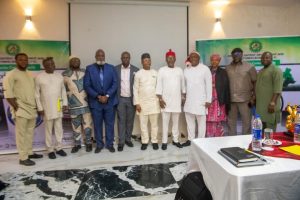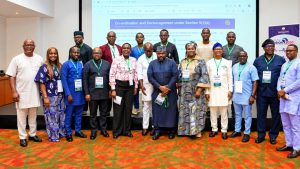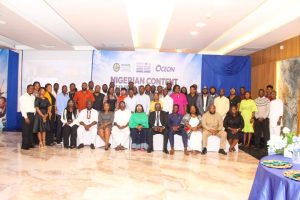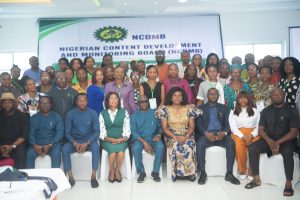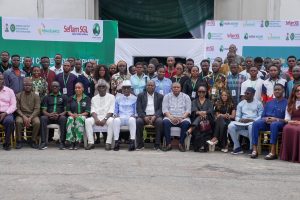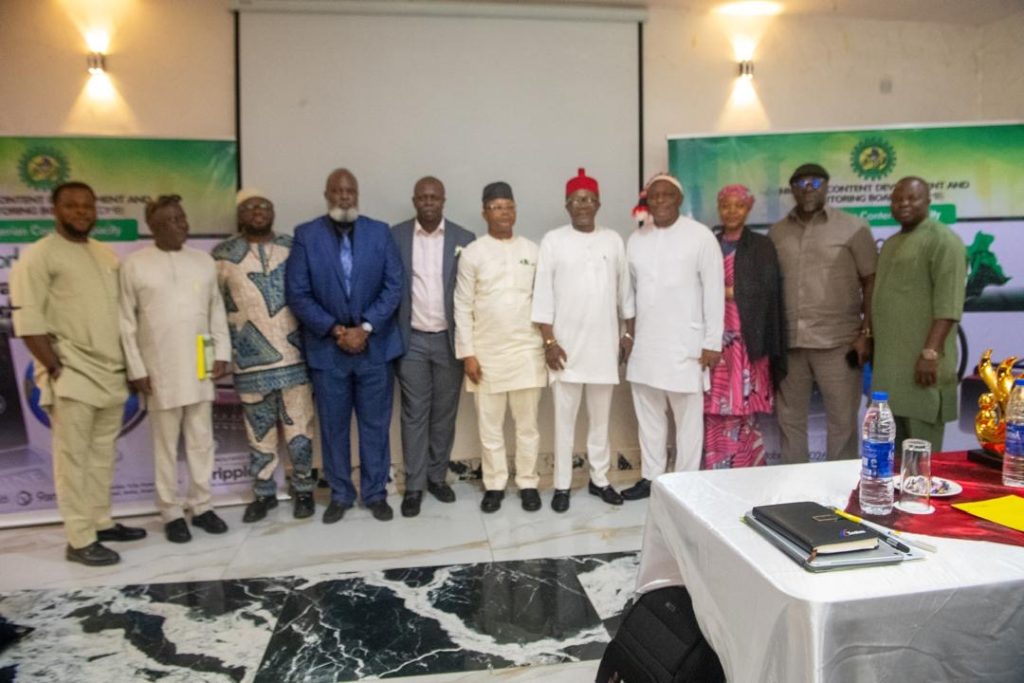
The Nigerian Content Development and Monitoring Board (NCDMB) on Thursday in Awka, Anambra State declared that the role of the mass media in information dissemination is of strategic importance to the effective implementation of the Nigerian Oil and Gas Industry Content Development (NOGICD) Act, 2010, and that capacity building for practitioners is prioritised by the Board.
The General Manager, Corporate Communications Division (CCD) of the NCDMB, Dr. Obinna Ezeobi stated this at a one-day Nigerian Content Media Stakeholders Workshop for editors and journalists in Anambra State. He stated that the Board is interested in building the capacities of journalists because “the NOGICD Act in Sections 67 and 70(n) mandated NCDMB to deploy media and other forms of communication and stakeholder engagement to expand the development of Nigerian Content.”
He explained that the Board’s Nigerian Content 10-Year Strategic Road Map, launched in 2017, identified five pillars and four enablers, and that the importance of media and communication and close engagement with internal and external stakeholders toward successful Nigerian Content implementation were underscored under one of the enablers christened “Collaboration and Stakeholder Engagement.”
“In the past 16 years of NCDMB, the media has contributed significantly to propagating and advancing the Nigerian local content policy, making it a national agenda and influencing several African countries to adopt it,” he noted, adding that the Board uses avenues like the capacity building workshop “to sharpen competencies and improve the quality of … reportage and practice.”
He noted that Anambra State is home to some renowned oil and gas magnates and local content titans like Engr. Emeka Okwuosa of Oilserv, Dr. Ernest Nnaemeka Azudialu, founder of Nestoil Group, and many other renowned oil service companies, hence the need for journalists in Anambra State to get fully abreast of the Nigerian Content law and NCDMB programmes.
In a paper presentation at the event, the Director of Planning, Research and Statistics (PRS) of the NCDMB, Mr. Silas Omomehin Ajimijaye, stated that the Board has a dual mandate: to develop local capacity and capabilities without compromising standards and to monitor and enforce the provisions of the Nigerian Oil and Gas Industry Content Development (NOGICD) Act, 2010.
He pointed out that the mandate aims to ensure maximum indigenous participation in the energy sector and to move the country away from dependence on imported goods and foreign service providers.
He explained that the Board is structured into seven directorates with clearly defined responsibilities that operate toward fulfilment of that mandate. These are Planning, Research and Statistics (PRS), Project Certification and Authorisation Directorate (PCAD), Monitoring and Evaluation Directorate (MED), Corporate Services Directorate (CSD), Finance and Personnel Management (F&PM), Legal Services Directorate (LSD), and Capacity Building Directorate (CBD).
On achievements of the NCDMB, which have seen Nigerian Content level surge from less than five per cent in 2010 to 61 per cent in December 2025, the PRS Director said the Board has “nurtured an innovative start-up AMAL Technologies, based in Abuja to commercialisation,” promptly issued Nigerian Content Plans and NCCCs, and ensured effective tracking of industry operations.
In 15 years of implementation of the NOGICD Act by the NCDMB, Nigeria has achieved 100 per cent capacity for engineering design in-country; 86 per cent of top management positions in the oil and gas now occupied by Nigerians; indigenous exploration and production (E&P) companies now account for over 60 per cent of Nigeria’s crude oil output (from less than 10 per cent in 2010), and there is indigenous ownership and control of over 40 per cent of vessels in the oil and gas sector. In addition, Nigerian firms with world-class facilities and the requisite technologies, most of them beneficiaries of NCDMB’s strategic interventions, are providing services such as metal frame fabrication and erection and installation of steel structures in the oil and gas industry in the Middle East and parts of Africa.
In a goodwill message, the Anambra State Commissioner for Information and Value Reorientation, Dr. Law Mefor, thanked the NCDMB for choosing the State for the stakeholder workshop, while assuring the Board that the Government would intensify post-event publicity for its industry-related activities.
The Commissioner noted that the State has huge reserves of natural gas but has remained excluded from the country’s Gas Master Plan. According to him, “the natural gas which the State has in abundance is coded, making it practically impossible for the State to access its deposits.” He urged the NCDMB to hold more events in the State, while affirming the readiness of the State Government for partnership with the Board.
Responding to the Commissioner’s comments, Mr. Ajimijaye said Anambra State could reverse any perceived disadvantage at the moment by developing a gas hub. Dr. Ezeobi also advised that the State Government engage with appropriate agencies like the NUPRC, NCDMB and others to get into reckoning.
In a panel session on the theme “Nigerian Content as a Catalyst for Sustainable Community Development,” moderated by Mr. Joseph Adebayo, Senior Manager (Zonal Coordination), senior Management personnel of the NCDMB, namely, Mr. Ajimijaye, Director, PRS, Mr. Ifeanyi Ukoha, General Manager, Zonal Coordination, and Engr. Emmanuel Umeanya, Manager, Monitoring Evaluation, explained issues such as contribution of research to host communities, implementation of Community Content Guideline and how it could be beneficial to Anambra State, and enforcement of Nigerian Content Plan to benefit host communities.
Mr. Ajimijaye pointed out that research by the PRS Directorate has, among other things, yielded products for remediation and restoration of areas severely impacted by oil spillage, and are in use in the clean-up of polluted sites in Ogoni, Rivers State, and elsewhere. On Community Content Guideline, Mr. Ukoha said the Board enforces relevant provisions such as host community contractor verification by oil and gas companies to ensure that benefits accrue to the right communities. He said Anambra would benefit greatly.
On Nigerian Content Plan, Engr. Umeanya said the Plan guarantees that the interests of host communities as relate to procurements, trainings, among other things, are adequately captured and safeguarded.
In a paper presentation entitled “Purpose-driven Journalism in the Digital Age,” Dr. Adeola Yusuf, Founder and Publisher, Platforms Africa, said media practice emphasis has shifted from “gate-keeper to sense-maker” and that media practitioners should “stop chasing clicks” and “start chasing impact.” According to him, “The future belongs to the most adaptable and credible journalist….”
In another presentation on the theme “Writing Compelling and Winning Articles in a Broken Media Economy” Mr. Kingsley Jeremiah, Editor, Energy and Power/Deputy Bureau Chief, The Guardian, Abuja, identified two truths that media practitioners must recognise as personal guide as they try to reinvent themselves in the face of changing dynamics. The truths, according to him, are that “The system is stacked against independent journalism” and that “Journalists can still produce consequential work, build careers and fund investigations.”
He advised journalists to “go deeper” in every reporting task by reading documents that others skim, particularly judgments, budgets, and procurements, among others. They should treat fellowships and awards as career infrastructure, prioritise networking, and go beyond mere passion by honing their skills, upholding discipline, and developing a strategy by building their respective beats.
In the second panel session on “Relevance in the Face of Changing Dynamics: How Can Media Practitioners Reinvent Themselves?” moderated by Mr. Teleola Oyeleke, Assistant Manager, PRS, of the NCDMB, Dr. Yusuf, Mr. Jeremiah and Dr. Ezeobi, there was consensus that knowledge and practice are critical to self-development and reinvention for the growth-minded media practitioner. Mr. Jeremiah pointed out that practitioners aiming at winning awards must capture every angle of a story, ensure adequate fact-checking, employ infographics where appropriate, noting that when judges see extra effort in reports, they reward them.
A management staffer of the Anambra Broadcasting Service (Radio/TV), Awka, Ms. Ebele E. Ezeh, who represented the State Chairman of the Nigeria Union of Journalists (NUJ), thanked the NCDMB for taking the Workshop to Awka, and called for deeper collaboration between the Board and the Union. The event ended with closing remarks by Mr. Teddy Bai, Assistant Manager, Government Relations, of the NCDMB. He thanked the Executive Secretary of the NCDMB, Engr. Felix Omatsola Ogbe, for his approval of the Stakeholder Workshop, and Dr. Obinna for his dedication to media engagements, noting that it was for strategic reasons relating to the huge contributions of the media industry to the oil and gas industry. He thanked all participants for their attendance.
Discover more from Nigerian Content Development & Monitoring Board
Subscribe to get the latest posts sent to your email.