• Calls for harmonised frameworks, AEB support as PETAN marks decade of leadership
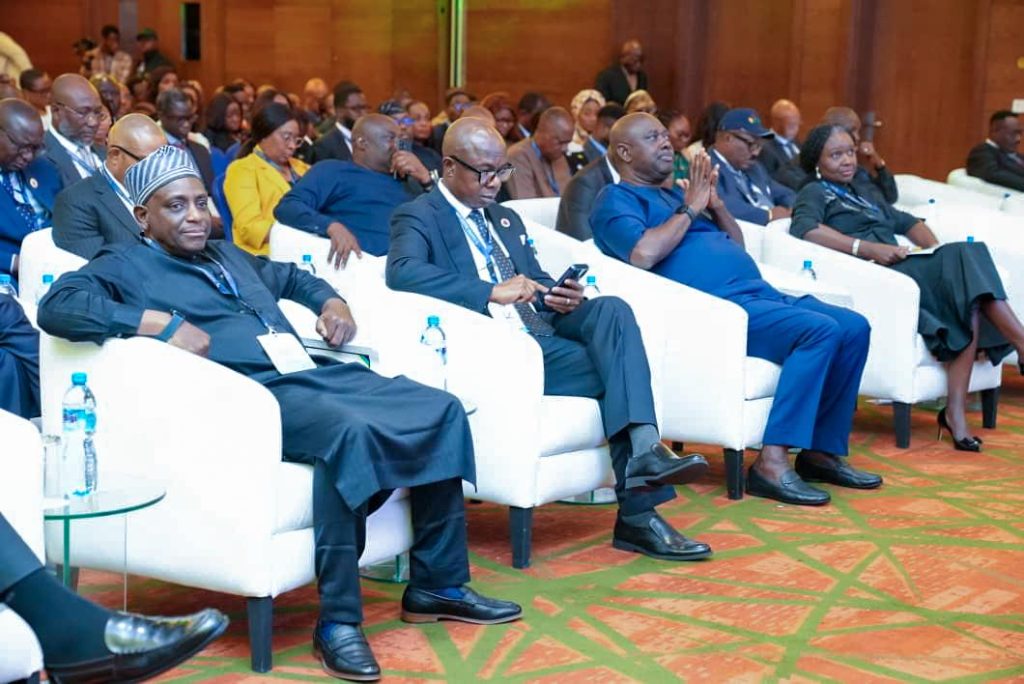
The Nigerian Content Development and Monitoring Board has called for strengthened continental collaboration to deepen local content development across Africa’s energy sector as industry leaders, policymakers and investors gathered in Lagos for the 10th anniversary of the Sub-Saharan African International Petroleum Exhibition and Conference (SAIPEC) 2026.
The conference, held at the Eko Convention Centre, Lagos, with the theme ‘Celebrating a Decade of Energy, Oil and Gas Innovation in Sub-Saharan Africa’, convened stakeholders from across Africa and the global energy community to reflect on progress made and chart a roadmap for the future.
Delivering a keynote titled ‘Africa’s Local Content Collaboration Strategy’, the Executive Secretary of NCDMB, Engr Felix Omatsola Ogbe, described collaboration as the cornerstone for achieving sustainable local content development on the continent.
Ogbe said lessons from previous SAIPEC engagements, including the 2025 edition, showed that Africa’s local content journey remains a work in progress, requiring collective rather than siloed efforts.
“For Africa, collaboration is not optional; it must remain central to our strategies,” he said. “Our efforts must be collective to ensure not only progress but the consolidation of gains already achieved.”
Ogbe who was represented by the Director, Corporate Services, Dr. Abdulmalik Halilu highlighted Nigeria’s deliberate and systematic approach to local content development, explaining that the country initially focused on deepening indigenous participation, followed by capacity building and the introduction of policies aimed at strengthening contractor competence.
He disclosed that NCDMB introduced guidelines prohibiting the transfer of certification to intermediaries, a move to ensure only capable and technically competent contractors are engaged in projects.
“This will be a critical criterion in technical tenders,” Halilu said, adding that the approach enhances quality delivery, strengthens indigenous firms and protects long-term industry sustainability.
He urged African countries to align their local content frameworks through collaboration and regulatory harmonisation, leveraging instruments such as the Brazzaville Accord to promote sectoral cooperation and an Afrocentric development model.
According to him, harmonised frameworks would reduce bottlenecks, improve project competitiveness and enhance Africa’s ability to attract global funding for energy projects.
He identified the establishment of the Africa Energy Bank under the African Petroleum Producers’ Organisation, in partnership with Afreximbank, as a major milestone for the continent’s energy sector.
“The African Energy Bank is designed to mobilise capital for African energy projects, provide access to affordable financing, strengthen industry players and boost capacity across the continent,” Ogbe said, calling on governments, regulators, investors and industry leaders to actively support its operational success.
He stressed that Africa’s energy future depends on shared vision and cross-border cooperation, noting that only a collaborative approach could deliver inclusive and sustainable local content strategies capable of positioning Africa competitively in a rapidly changing global energy landscape.
In his opening address, Chairman of the Petroleum Technology Association of Nigeria, Engr Wole Ogunsanya, described SAIPEC as more than a conference but a movement conceived a decade ago to amplify African capabilities and redefine the continent’s role in the global energy industry.
Over the past 10 years, he said SAIPEC has driven strategic dialogue on energy policy and investment, elevated indigenous participation, connected African service companies to global opportunities and influenced projects with tangible outcomes.
“This decade of progress reflects the resilience, innovation and determination of African industry players, particularly indigenous companies, in the face of global volatility and energy transition pressures,” he said.
Ogunsanya noted that despite global energy transition conversations, Africa’s immediate challenge remains energy access, affordability and reliability, with over 600 million Africans lacking access to electricity.
He stressed that Africa’s energy transition must be pragmatic, leveraging hydrocarbons responsibly to drive development while gradually integrating cleaner and renewable solutions.
Highlighting the growth of indigenous capacity, Ogunsanya said local content policies enabled Nigerian companies to move from participation to leadership across drilling, engineering, fabrication, asset acquisition, technology deployment and innovation.
However, he identified access to finance, policy consistency, contract sanctity, timely project execution and stronger collaboration between operators and service companies as critical to sustaining progress.
Looking ahead, Ogunsanya said the next decade must focus on investment and execution, noting that capital inflow depends on regulatory clarity, transparent processes, competitive fiscal frameworks and bankable projects.
He also emphasised the role of digitisation, automation, data-driven operations and low-carbon solutions in improving efficiency, safety and sustainability across the energy value chain.
Discover more from Nigerian Content Development & Monitoring Board
Subscribe to get the latest posts sent to your email.