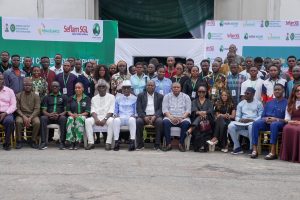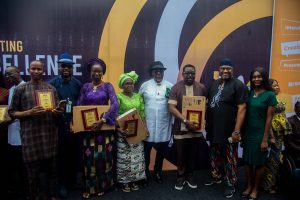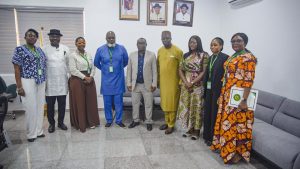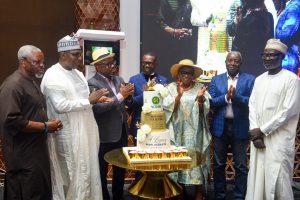
The Nigerian Content Development and Monitoring Board (NCDMB), through its Zonal Coordination Division, recently reaffirmed its commitment to deepening local participation and sustainable development in Nigeria’s oil and gas industry with the successful hosting of a one-day Sensitization/Enlightenment Workshop on the Community Content Guideline in Port Harcourt, Rivers State.
The workshop, held at Landmark Hotel last week, brought together community leaders, youth groups, contractors, technocrats, industry stakeholders and representatives from oil-producing communities across Rivers State to enhance awareness of the Community Content Guideline and the opportunities available under the Nigerian Oil and Gas Industry Content Development (NOGICD) Act.
Delivering the keynote address, the Managing Director of Ambong Energy Services and respected community leader, Mr. Johnson Nwosu, underscored the importance of promoting local participation and strengthening indigenous capacity as the cornerstone of sustainable growth within Nigeria’s oil and gas industry.
Mr. Nwosu observed that host communities have long borne the environmental and social consequences of oil exploration and production, stressing that the enactment of the NOGICD Act in 2010 and the establishment of the NCDMB marked a significant turning point in ensuring greater inclusion of Nigerians in the industry’s value chain.
According to him, effective implementation of the Community Content Guideline is expected to integrate host communities into oil and gas operations, increase Nigerian participation across the industry’s value chain, maximise the utilisation of local manpower and services, attract investments into community enterprises, strengthen linkages between the oil and gas industry and other sectors of the economy, and promote sustainable partnerships among government, operators, contractors and host communities.
The keynote speaker identified the four strategic pillars of the Community Content Framework as the establishment of project and community offices, employment and human capital development, procurement of goods and services, and funding for enterprise development.
He maintained that employment opportunities for host communities should go beyond unskilled labour to include structured programmes for technical training, mentorship, scholarships, vocational education, entrepreneurship development and digital skills acquisition to prepare youths for future managerial and technical positions within the industry.
Mr. Nwosu further advocated transparent procurement systems that provide qualified community-based businesses with access to contracts in logistics, catering, fabrication, transportation, maintenance, engineering support and other operational services, while encouraging partnerships between established contractors and indigenous community enterprises to facilitate technology transfer and business growth.
Speaking on enterprise development, he called for greater access to funding for qualified community-owned businesses through equipment financing, working capital support, entrepreneurship funds and capacity-building initiatives, noting that financial inclusion remains critical to the growth of indigenous enterprises.
The keynote speaker also emphasised the need for the NCDMB to strengthen its database of skilled manpower and entrepreneurs from host communities to enable operators and contractors readily identify qualified local personnel for employment and service delivery.
Highlighting the importance of human capital development, Mr. Nwosu stated that continuous investment in education, specialised technical training and professional certification remains the only sustainable pathway to meaningful local participation in the highly technical oil and gas industry.
Reflecting on Nigeria’s petroleum history, he recalled that crude oil production declined to approximately 800,000 barrels per day during the height of unrest in the Niger Delta before the Amnesty Programme restored stability and significantly increased production. According to him, the experience demonstrates that lasting peace in host communities is directly linked to inclusive participation and faithful implementation of the NOGICD Act and the Community Content Guideline.
Earlier in his welcome remarks, the General Manager, Zonal Coordination Division of the NCDMB, Mr. Ifeanyi Ukoha, explained that the Board was established to ensure that a greater proportion of the enormous expenditure in Nigeria’s oil and gas industry is retained in-country through local capacity development and indigenous participation.
He noted that before the enactment of the NOGICD Act, substantial portions of oil industry expenditure left Nigeria because foreign companies dominated virtually every aspect of the value chain.
Mr. Ukoha stated that the Board has since made significant progress in building indigenous technical capacity, increasing Nigerian participation in executive leadership within multinational companies, supporting local contractors and facilitating the acquisition of formerly foreign-owned assets by indigenous companies.
He encouraged youths to register on the Nigerian Oil and Gas Industry Joint Qualification System (NOGICJQS) to access employment opportunities, scholarships and training programmes while also drawing attention to various funding windows available to community contractors and small businesses through the Nigerian Content Intervention Fund.
The General Manager further explained that the Community Content Guideline complements the Petroleum Industry Act by focusing specifically on extracting project-based opportunities for qualified host community contractors, businesses and skilled personnel.
Participants also received presentations from officials of the Board’s Human Capacity Development, Planning, Research and Statistics, and Nigerian Content Intervention Fund departments on registration processes, capacity development initiatives and available financing opportunities.
The workshop concluded with a renewed commitment by stakeholders to strengthen collaboration among government, industry operators, contractors and host communities to ensure effective implementation of the Community Content Guideline and the NOGICD Act.
Participants at the event included community leaders, youth organisations from various local government areas, technocrats, community contractors and representatives of oil-producing communities across Rivers State.
The NCDMB reaffirmed that sustained investment in human capital development, enterprise support and community participation remains essential for building a resilient, peaceful and globally competitive Nigerian oil and gas industry.
Discover more from Nigerian Content Development & Monitoring Board
Subscribe to get the latest posts sent to your email.